 Lake Ashi Cruise
The Hakone Loop in One Day: Route, Timing and Where It Goes Wrong
Last reviewed August 2026
The Hakone loop is a five-leg circuit around the Hakone caldera: mountain railway, cablecar, ropeway, sightseeing boat and bus, joined into one route that starts and ends at Hakone-Yumoto. Riding time alone runs about two hours twenty minutes, but with waits, transfers and any time actually spent at a stop, a full circuit fills a real day rather than a morning. This lays out the five legs in order, a realistic hour-by-hour plan, which direction rewards you with better light, and the two points in the loop most likely to go wrong.
Quick answer Five legs, the timings, and which one sets your day
The Hakone loop is a five-leg circuit of railway, cablecar, ropeway, boat and bus around the caldera, taking about two hours twenty minutes of riding time alone. Most travelers need a full day to ride it with stops, and japan-guide recommends two days and one night to do it without rushing.
Key takeaways
- Five legs: Tozan railway, cablecar, ropeway, the boat leg across Lake Ashi, then bus back to the start
- Riding time is about two hours twenty minutes; a full loop with stops fills an entire day
- The boat is the one leg you can lose to weather, since sailings stop in fog or strong wind with no substitute
- Ropeway and boat alone already run 3,700 yen combined, before the railway or the bus
- The most booked day trip covers most of the loop with a guide, see the most booked day trip
- For the pass math behind riding it independently, see whether the Freepass pays
What the Hakone Loop Is
Five legs, five different vehicles
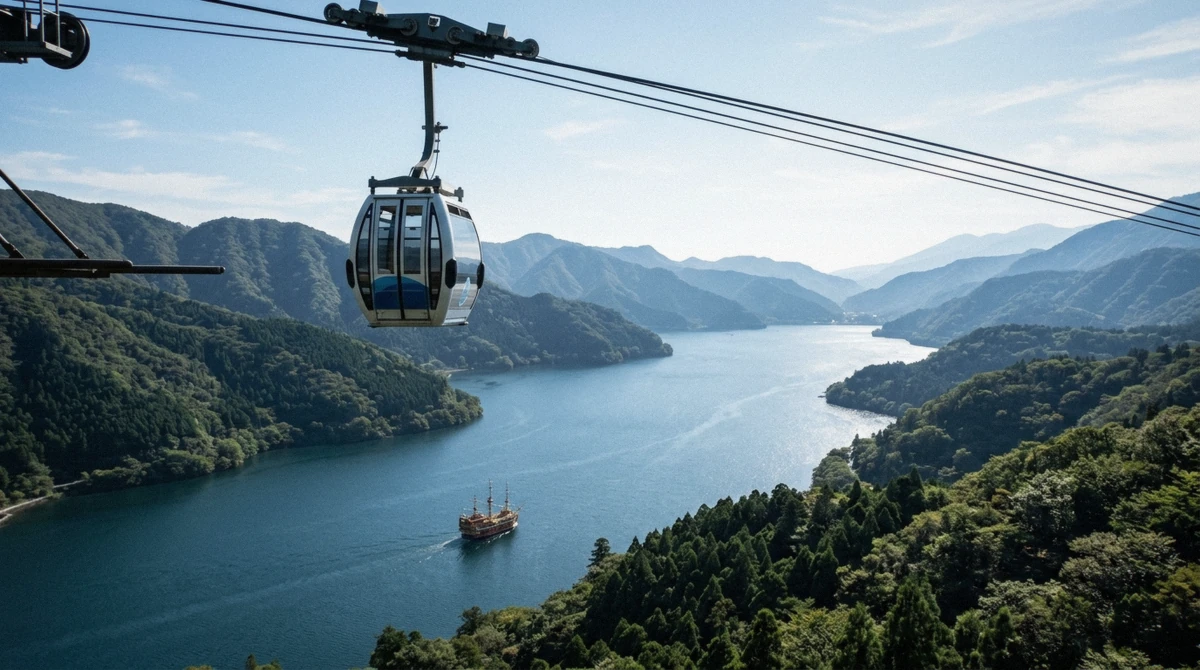
The Hakone loop, sometimes called the Golden Route, links five separate modes of transport into a single circuit around the Hakone caldera. It starts at Hakone-Yumoto, climbs by mountain railway to Gora, switches to a cablecar and then a ropeway to reach the lake's north shore at Togendai, crosses the water by sightseeing boat, and finishes on a bus back to Hakone-Yumoto. Nobody rides all five without at least one transfer wait, since none of the connections are timed to meet each other exactly.
- 1. Hakone-Yumoto to Gora, Hakone Tozan Railway
- 2. Gora to Sounzan, Tozan cablecar
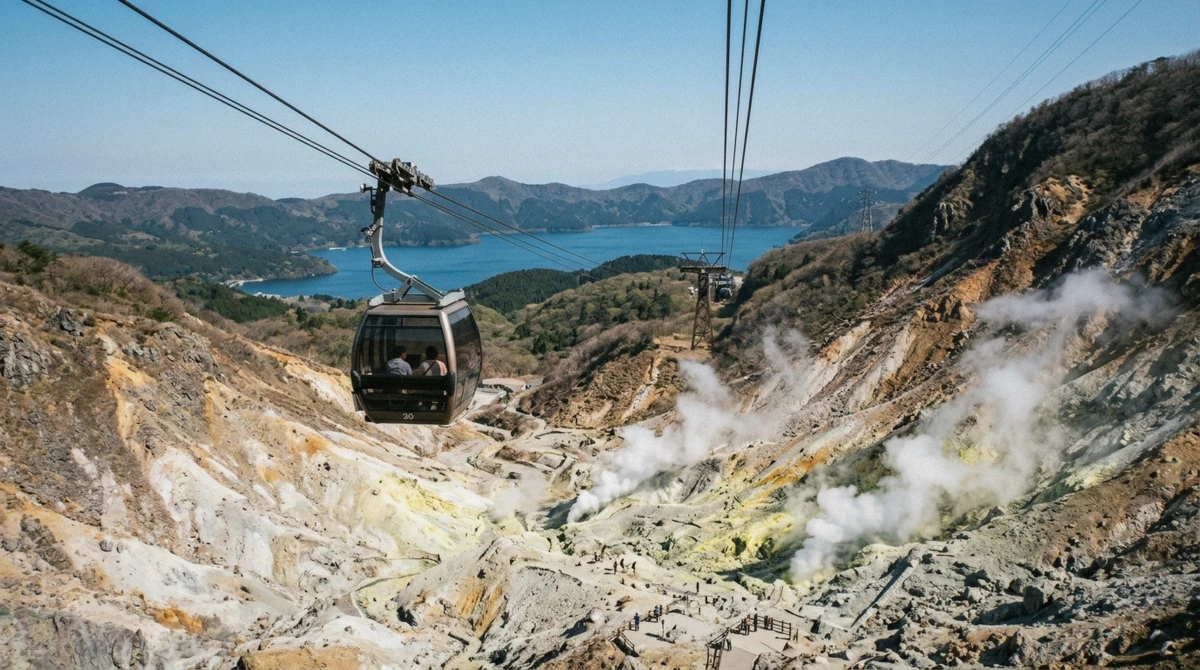
- 3. Sounzan to Togendai, Hakone Ropeway
- 4. Togendai to Hakone-machi, sightseeing boat
- 5. Moto-Hakone to Hakone-Yumoto, Tozan bus
Hakone-machi and Moto-Hakone sit a few minutes apart on the same southern shore, close enough that most riders treat the boat arrival and the bus departure as one stop rather than a separate transfer. The Hakone Tozan railway itself is worth a mention on its own: between Hakone-Yumoto and Gora it climbs by switchback, and the train physically reverses direction three times on the way up, which is unusual enough that first-time riders often think they have boarded the wrong train.
The Loop Leg by Leg
| Leg | Mode | Time | Frequency |
|---|---|---|---|
| Hakone-Yumoto → Gora | Hakone Tozan Railway | 35 minutes | every 15 to 20 minutes |
| Gora → Sounzan | Tozan cablecar | 10 minutes | every 15 minutes |
| Sounzan → Togendai | Hakone Ropeway | 30 minutes | continuous |
| Togendai → Hakone-machi | Sightseeing boat | 30 minutes | every 30 to 60 minutes |
| Moto-Hakone → Hakone-Yumoto | Tozan bus | 35 minutes | every 15 to 20 minutes |
Four of the five legs run every 15 to 20 minutes or continuously, which forgives a late arrival at almost any stop on the loop. The boat is the outlier: it only leaves every 30 to 60 minutes, so it is the leg that actually sets your timing for the day. Miss a sailing by five minutes and the wait is real, not a rounding error.
How Long It Really Takes
Add the five ride times together and the loop is about two hours twenty minutes (2 hours 20 minutes) in the seat. Nobody actually experiences it that way. Transfer walks, ticket queues, the boat's wider gap between sailings and any time spent looking at the view rather than riding past it stretch that into a genuine full day, door to door from Hakone-Yumoto and back.
japan-guide, which has tracked this route for years, recommends two days and one night rather than a single sprint, specifically so the ropeway and the boat aren't rushed and there is room for lunch and the Owakudani valley stop without watching the clock the whole way round. A single determined day is doable, and this page assumes that is the plan, but it leaves little slack if any one leg runs behind.
Which Direction to Ride It
Clockwise gets you to the water early
Starting at Hakone-Yumoto and riding the railway up first, as listed above, puts the boat crossing in the late morning, after the fog that often sits over the lake at dawn has usually burned off and before the afternoon coach groups from Tokyo arrive in force. It also means the ropeway and Owakudani, the most weather-sensitive leg of the five, come earlier in the day, which matters if gas readings at the valley force a closure later on.
Riding the loop the other way, boat first from Hakone-machi toward Togendai, suits travelers already staying on the lake shore who want the crossing at its quietest first thing, before either direction's coach traffic has built up. Neither direction changes the total ride time; the choice is really about which crowd pattern and which weather window you'd rather have on your side.
The Loop on the Map
The five legs traced in order: railway up to Gora, cablecar and ropeway to the lake's north shore, boat across, bus back to Hakone-Yumoto.
What It Costs
Pass, or pay leg by leg
The two legs with confirmed fares are the ones most travelers actually worry about: the sightseeing boat at 1,700 yen one way and the ropeway at 2,000 yen one way, 3,700 yen combined before the railway, cablecar or bus are added. Point-to-point fares for the railway, cablecar and bus legs vary by exact station pair and are not published in one clean table, which is the main reason most riders default to a pass rather than buying five separate tickets across the day.
A Hakone Freepass covers all five legs on a single ticket alongside other transport in the area, but whether it actually saves money depends on how much of the loop you ride and where you start from. Whether the Freepass pays works through that arithmetic leg by leg, including the two-day and three-day prices from both Odawara and Shinjuku.
A Realistic Loop Day, Hour by Hour
One workable clockwise sequence from Hakone-Yumoto, built around the boat's wider gap between sailings rather than around the faster legs.
-
8:00
Board the Tozan railway at Hakone-Yumoto
35 minutes to Gora, with the train reversing direction three times on the climb.
-
8:35
Arrive Gora, walk to the cablecar
Short connection; cablecars run every 15 minutes toward Sounzan.
-
8:55
Cablecar to Sounzan
10 minutes.
-
9:10
Board the ropeway toward Togendai
About 30 minutes, with the option to break the journey at Owakudani.
-
10:00
Arrive Togendai, walk to the pier
Boats leave every 30 to 60 minutes, so check the next departure as soon as you arrive.
-
10:30
Board the sightseeing boat
30 minutes across the lake to Hakone-machi.
-
11:00
Arrive Hakone-machi, walk toward Moto-Hakone
A few minutes on foot; lunch or the torii and shrine fit naturally here.
-
13:00
Board the bus at Moto-Hakone
35 minutes back to Hakone-Yumoto, closing the loop.
-
13:35
Arrive back at Hakone-Yumoto
Roughly five and a half hours door to door, including a two-hour break at the lake shore.
Where the Loop Goes Wrong
The boat is the weak link
Every other leg of the loop is a train, cablecar or bus running on rails or a fixed road, largely unaffected by weather short of a genuine storm. The boat is different: sailings are cancelled outright in thick fog or strong wind, and there is no substitute service laid on when that happens. A loop planned tightly around a single afternoon crossing can lose that leg entirely on a bad-weather day, which is the single biggest risk in the whole route.
- Fog or strong wind cancels sailings with no replacement service
- The 30-to-60-minute gap between boats punishes a late arrival at Togendai or Hakone-machi far more than any other leg
- Midday queues build at the boat and ropeway before either train or bus stations feel busy
- Riding the loop in one direction only, with no buffer, leaves no recovery time if one leg runs late
None of this means avoid the boat; it means build slack around it rather than around the railway or the cablecar. Arrive at Togendai or Hakone-machi with time to spare, and check the sky before committing to a same-day return crossing rather than an overnight stay.
Doing It Without the Planning
For travelers who would rather hand the timing risk to someone else, guided Hakone day trips run fixed itineraries that cover most of the loop with a coach connecting the legs a private rider would otherwise have to time manually. The most booked day trip combines the ropeway, Owakudani and the lake into one scheduled day, with the operator absorbing the boat-cancellation risk rather than the traveler. For a slower pace with more time at any single stop, the slowest paced option spends about 80 minutes at Hakone Shrine alone, more time than most independent loop days can spare.
How Much Loop Do You Actually Want
If You have one day from Tokyo and want the whole circuit
Ride it in the standard direction and accept that lunch is a rushed twenty minutes. Reaching Hakone-Yumoto by nine in the morning is what makes it fit.
If You have one day and would rather enjoy three legs than rush five
Take the railway to Gora, the cablecar and the ropeway, cross the lake, and come back by bus from Moto-Hakone. That is the loop minus the museums.
If You are staying a night in the caldera
Split it. Railway and Gora on day one, ropeway, lake and shrine on day two, which is what the guidebooks quietly recommend.
If The forecast is fog or strong wind
Plan the boat leg for the afternoon and keep the bus as a fallback. Sailings are the only part of the circuit that can be cancelled outright.
If You would rather not plan any of it
A coach day trip covers the same ground with a driver waiting at each stop. See guided Hakone day trips.
Pass or Point to Point
The loop is where a pass stops being an abstraction and turns into arithmetic. Riding the two headline legs alone puts you most of the way to a two-day pass; adding the railway and the buses takes you past it.
| What you ride | Bought separately | Covered by a 2-day Freepass |
|---|---|---|
| Sightseeing cruise, one way | 1,700 yen | Yes, unlimited |
| Ropeway, one way | 2,000 yen | Yes |
| Tozan railway, Hakone-Yumoto to Gora | Paid separately | Yes |
| Tozan cablecar, Gora to Sounzan | Paid separately | Yes |
| Tozan bus back to Hakone-Yumoto | Paid separately | Yes |
| Romancecar seat from Shinjuku | 2,470 yen | No, surcharge of 1,200 yen applies |
The headline rides everyone photographs come to 3,700 yen on their own, which is why the full circuit almost always favours the pass and a single out-and-back almost never does. The arithmetic is worked through in whether the Freepass pays, and the boat fares themselves live on the Lake Ashi cruise guide.
Questions About the Hakone Loop
How long does it take to do the Hakone loop?
About two hours twenty minutes of riding time across the five legs. With transfers, queues and any real time spent at a stop, a full loop day usually runs five to eight hours door to door, and japan-guide recommends two days and one night to do it without rushing.
What is the Hakone loop?
A five-leg circuit around the Hakone caldera: the Tozan railway from Hakone-Yumoto to Gora, a cablecar to Sounzan, the ropeway to Togendai, a sightseeing boat across Lake Ashi, and a bus back to Hakone-Yumoto.
Which direction should you ride the Hakone loop?
Clockwise, railway first, puts the boat crossing in the late morning after fog has usually cleared and before afternoon coach crowds build. Riding it the other way suits travelers already staying on the lake shore who want the boat at its quietest first thing.
How much does the Hakone loop cost?
The two confirmed fares are the boat at 1,700 yen one way and the ropeway at 2,000 yen one way, 3,700 yen combined. Railway, cablecar and bus fares vary by station pair, which is why most riders use a Hakone Freepass rather than five separate tickets.
Can you do the Hakone loop in one day from Tokyo?
Yes, but the loop itself is a full day once you are in Hakone, so a same-day return to Tokyo makes for a very long day. Most independent travelers stay at least one night in Hakone to ride the loop without rushing.
What happens if the boat on the loop is cancelled?
Sightseeing sailings stop in thick fog or strong wind with no substitute service. There is no scheduled backup crossing, so a cancelled sailing on a tight day means either waiting for conditions to clear or skipping that leg of the loop entirely.
The loop rewards planning around its slowest, most weather-exposed leg rather than its fastest one. Build the day around the boat's gap between sailings, keep the railway and cablecar as the flexible part of the schedule, and the rest of the route more or less looks after itself.